Salar de Uyuni is one of the most extraordinary natural wonders on Earth, attracting hundreds of thousands of visitors each year. Located in southwest Bolivia, this massive salt flat covers more than 10,500 square kilometers (4,050 square miles) and offers two completely different experiences depending on when you visit.
Some travelers dream of seeing the famous mirror effect, where the world’s largest salt flat transforms into a giant reflection of the sky. Others prefer the dry season, when endless white geometric salt patterns create the iconic landscape seen in countless travel photographs.
So, when is the best time to visit Salar de Uyuni?
The answer depends entirely on the type of experience you’re looking for. This guide compares both seasons in detail, helping you decide whether the rainy season or the dry season is the perfect fit for your adventure.
Understanding Salar de Uyuni’s Two Seasons
Unlike many destinations that simply have “good” or “bad” weather, Salar de Uyuni offers two distinct experiences.
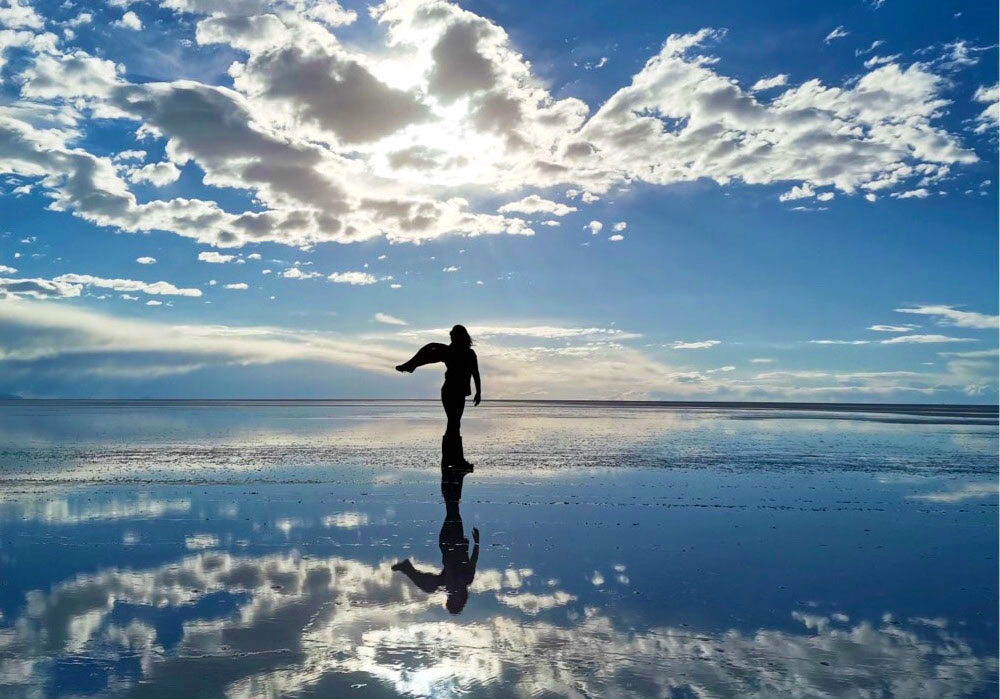
During the rainy season, a thin layer of water covers parts of the salt flats, creating the famous mirror effect.
During the dry season, the water evaporates, revealing a brilliant white landscape covered with hexagonal salt formations stretching to the horizon.
Both seasons are spectacular—but they offer very different opportunities.
Rainy Season (December to April)
The rainy season is famous for one incredible phenomenon: the mirror effect.
After seasonal rainfall, shallow water spreads across the salt flats, creating one of the world’s most surreal natural reflections.
The sky, clouds, mountains, and people appear perfectly mirrored on the ground, making it almost impossible to distinguish where the earth ends and the sky begins.
This is the image that has made Salar de Uyuni famous around the world.
Why the Mirror Effect Happens
Salar de Uyuni is remarkably flat, with very little variation in elevation.
When rainwater collects on its surface, even a layer only a few centimeters deep acts like an enormous natural mirror.
On calm days with little wind, the reflection becomes nearly perfect.
This unique phenomenon is one of the biggest reasons photographers travel from around the globe to visit Bolivia during the rainy season.
Advantages of Visiting During the Rainy Season
Many travelers consider this the most magical time to visit.
Benefits include:
- The famous mirror effect
- Stunning sunrise reflections
- Incredible sunset photography
- Dramatic cloud formations
- Unique landscape unlike anywhere else on Earth
- Exceptional drone photography opportunities (where permitted)
The visual experience is truly unforgettable.
Disadvantages of the Rainy Season
While beautiful, the rainy season also has limitations.
Possible drawbacks include:
- Flooded roads
- Travel delays
- Route changes
- Limited vehicle access
- Some attractions temporarily inaccessible
- Incahuasi Island may occasionally be closed due to high water levels
Weather can also change quickly, meaning reflections are not guaranteed every day.
Best Months for the Mirror Effect
Generally, the best conditions occur between:
- January
- February
- Early March
These months typically offer the highest chance of standing water across the salt flats.
However, rainfall varies from year to year, so conditions are never completely predictable.
Dry Season (May to November)
Once the rains end, the water gradually disappears.
The salt flats become a vast white desert covered in geometric salt polygons.
This is the classic Salar de Uyuni landscape featured in many travel guides.
Visibility often extends for miles in every direction.
Advantages of the Dry Season
The dry season offers several practical benefits.
These include:
- Easier transportation
- Better road conditions
- Full access across the salt flats
- More reliable tour schedules
- Easier perspective photography
- Access to Incahuasi Island
- Comfortable sightseeing with less risk of weather-related disruptions
It is also the busiest travel season.
Disadvantages of the Dry Season
Although spectacular, some travelers miss the famous reflections.
Potential downsides include:
- No mirror effect
- Cooler nighttime temperatures
- Larger tourist crowds during peak months
- Less dramatic skies compared to the rainy season
Even so, many visitors actually prefer the endless white landscape because it allows for creative photography and uninterrupted exploration.
Which Season Is Better for Photography?
The answer depends on your photography style.
Mirror Effect
Perfect for:
- Landscape photography
- Reflections
- Sunrise photography
- Sunset photography
- Drone images
- Artistic compositions
Dry Season
Ideal for:
- Perspective photography
- Family photos
- Group photos
- Wide landscapes
- Travel portraits
- Geometric salt formations
Both seasons offer extraordinary photographic opportunities.
The Famous Perspective Photos
One of Salar de Uyuni’s biggest attractions is the ability to create optical illusion photographs.
These are easier to stage during the dry season because:
- The surface is firm
- Equipment stays dry
- Objects remain stable
- Walking is easier
Popular ideas include:
- Giant dinosaurs
- Toy cars
- Coffee mugs
- Shoes
- Miniature people
- Creative jumping poses
Bring props to make your photos even more memorable.
Wildlife Throughout the Year
The surrounding Altiplano is home to remarkable wildlife regardless of the season.
You may see:
- Flamingos
- Vicuñas
- Llamas
- Alpacas
- Andean foxes
- Viscachas
The colorful lagoons near Salar de Uyuni remain excellent birdwatching destinations throughout much of the year.
Weather Conditions
The weather can be extreme in any season.
Rainy Season
Typical conditions:
- Mild daytime temperatures
- Afternoon showers
- Cooler evenings
- Cloud cover
- Occasional thunderstorms
Dry Season
Expect:
- Sunny skies
- Cold nights
- Freezing early mornings
- Strong UV radiation
- Dry air
Even during the warmer months, temperatures often fall below freezing overnight.
Road Conditions
This is one of the biggest differences between seasons.
Rainy Season
Roads may become muddy or flooded.
Some routes are modified for safety.
Travel times occasionally increase.
Dry Season
Road conditions are generally better.
Vehicles can access nearly all sections of the salt flats, allowing for longer exploration.
Visiting Incahuasi Island
Incahuasi Island is one of the highlights of Salar de Uyuni.
This rocky island rises dramatically from the salt flats and is covered with giant cacti that are hundreds of years old.
Dry Season
Access is usually available.
Visitors can climb to panoramic viewpoints overlooking the endless white landscape.
Rainy Season
If water levels are high, access may be temporarily restricted.
Always check current conditions before booking your tour.
Crowds and Tourism
Tourism patterns vary throughout the year.
Peak Season
June through August generally attracts the highest number of international visitors due to favorable weather.
Expect:
- More tour departures
- Higher accommodation demand
- More visitors at popular viewpoints
Rainy Season
Visitor numbers are typically lower.
This often creates a quieter and more peaceful experience.
Cost Differences
Tour prices fluctuate depending on demand.
During peak travel periods, expect:
- Higher accommodation prices
- Increased tour costs
- Earlier booking requirements
Traveling during the shoulder months may offer better value.
What Should You Pack?
Regardless of the season, bring:
- Warm jacket
- Thermal clothing
- Gloves
- Hat
- Sunglasses
- Sunscreen
- Lip balm
- Hiking boots
- Reusable water bottle
- Camera
- Portable charger
- Snacks
For the rainy season, waterproof footwear and a rain jacket are also highly recommended.
Which Season Is Best for Families?
Both seasons can be enjoyable for families.
The dry season often provides:
- Easier walking conditions
- Less chance of weather disruptions
- More reliable transportation
Families with young children often appreciate these advantages.
Which Season Is Better for Adventure Travelers?
Adventure seekers may enjoy either season.
Choose the rainy season if you want:
- Unique landscapes
- Mirror photography
- Fewer tourists
Choose the dry season if you want:
- Longer exploration
- More accessible routes
- Hiking opportunities
- Perspective photography
Frequently Asked Questions
Is the mirror effect guaranteed?
No.
The mirror effect depends on recent rainfall and weather conditions.
Although January and February generally offer the best chance, nature is unpredictable.
Can I visit Salar de Uyuni year-round?
Yes.
Tours operate throughout the year, although routes may occasionally change due to weather.
Which season is colder?
The dry season usually has colder nights, especially between June and August.
Morning temperatures often fall below freezing.
Is the rainy season dangerous?
Not generally.
Professional tour operators adjust routes when necessary and monitor weather conditions closely.
However, temporary delays and itinerary changes are possible.
Can I still take perspective photos during the rainy season?
Yes, but they may be more challenging because standing water limits where props can be placed.
The dry season remains the best choice for classic optical illusion photography.
Mirror Effect vs Dry Season Comparison
| Feature | Mirror Effect (Dec–Apr) | Dry Season (May–Nov) |
|---|---|---|
| Famous reflections | ★★★★★ | ★☆☆☆☆ |
| Perspective photography | ★★★☆☆ | ★★★★★ |
| Road accessibility | ★★★☆☆ | ★★★★★ |
| Incahuasi Island access | Variable | Usually available |
| Weather stability | Moderate | Excellent |
| Tourist crowds | Lower | Higher |
| Sunrise photography | Outstanding | Excellent |
| Sunset photography | Outstanding | Excellent |
| Landscape appearance | Reflective | White geometric salt patterns |
There is no single “best” time to visit Salar de Uyuni—only the best time for the experience you want.
If your dream is to witness the breathtaking mirror effect, travel during the rainy season, especially between January and early March. You’ll have the chance to see one of the most surreal natural spectacles on Earth, where the sky seems to merge seamlessly with the ground.
If you prefer reliable weather, easier transportation, full access to attractions like Incahuasi Island, and the opportunity to capture the famous perspective photographs, the dry season is the better choice.
Whichever season you choose, Salar de Uyuni offers an unforgettable adventure. From its endless white horizon and extraordinary landscapes to its colorful lagoons, volcanoes, and unique wildlife, every visit reveals why this destination is considered one of the greatest natural wonders in South America.